This is our independent website, you can check out our products.https://pjcases.com
In our fast-paced, digitally connected world, staying powered up is no longer a luxury but a necessity. The anxiety of a low battery warning is a universal experience, which is why the development of the modern fast charger has been such a game-changer. Gone are the days of overnight charging; today’s technology allows us to gain significant battery life in just a matter of minutes. This leap forward isn’t just about convenience; it’s a sophisticated interplay of power electronics, communication protocols, and advanced battery management systems designed to refuel our devices safely and efficiently.
The Science Behind Quick Charge Technology
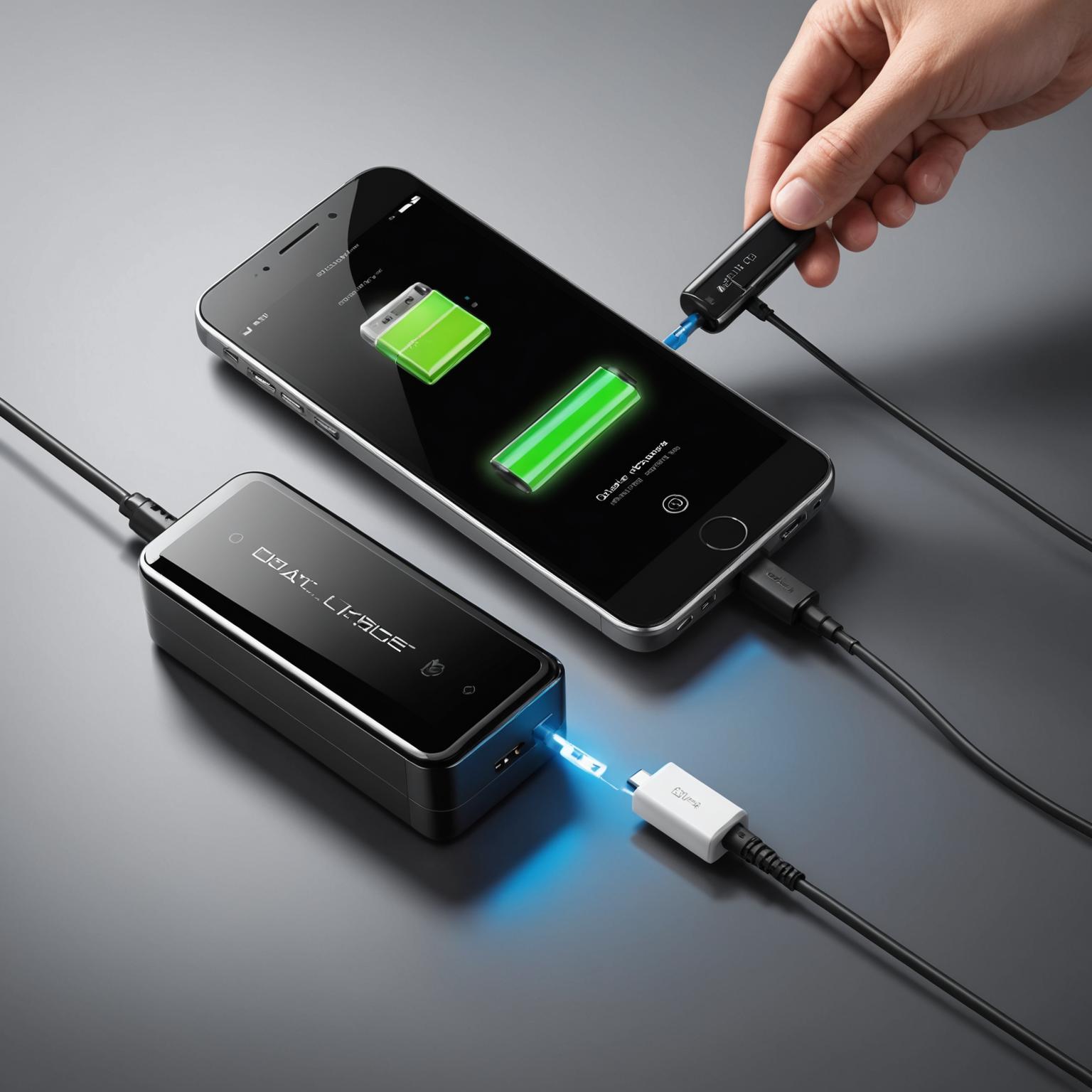
At the heart of rapid refueling lies quick charge technology. Power, measured in watts (W), is the product of voltage (V) and current (amperage, A). Traditional USB chargers operated at a standard 5V and 0.5A, delivering a mere 2.5W of power. Early improvements pushed this to 5W (5V/1A). However, modern quick charge technology dramatically increases this output by intelligently manipulating both voltage and current. Standards like Qualcomm’s Quick Charge, USB Power Delivery (USB-PD), and others from manufacturers like OPPO (VOOC) and Samsung (Adaptive Fast Charging) use different approaches. For instance, USB-PD is a universal standard that can negotiate power levels up to 240W, supporting a wide range of devices from smartphones to laptops. This technology relies on a digital communication handshake between the device and the charger to determine the maximum power the device’s battery can safely accept at any given moment, adjusting the voltage and amperage in real-time for optimal charging speed without compromising battery health.
The Critical Role of the Fast Charger Adapter
A common misconception is that any powerful adapter can fast charge any device. The reality is that the fast charger adapter is a highly intelligent component, not just a simple power brick. This adapter contains specialized circuitry that communicates directly with the device it’s connected to. When you plug in a compatible device, a negotiation process begins over the USB cable’s data lines. The device informs the adapter of its charging capabilities and its current battery status (e.g., state of charge, temperature). The fast charger adapter then responds by adjusting its power output to the optimal profile requested by the device. Without this communication, the adapter will default to a standard, slower charging speed to ensure safety. This is why using the correct adapter and a high-quality cable that can handle the increased power and support the data communication is crucial for achieving true fast charging speeds.
Ensuring Safety and Battery Longevity
Pushing high levels of power into a lithium-ion battery inherently generates heat, which is the primary enemy of battery longevity. To counteract this, advanced quick charge technology incorporates multiple layers of safety protocols. Sophisticated algorithms within both the device and the fast charger adapter constantly monitor temperature, voltage, and current. If the temperature exceeds a safe threshold, the system will automatically throttle the charging speed to allow the battery to cool down. Furthermore, the charging process is not linear. A fast charger will deliver maximum power when the battery is nearly empty and then gradually taper the power delivery as the battery reaches full capacity, typically slowing significantly after the 80% mark. This multi-stage charging process, known as trickle charging in the final stages, prevents overcharging and minimizes stress on the battery’s chemical components, ensuring both the immediate safety of the user and the long-term health of the device’s battery.