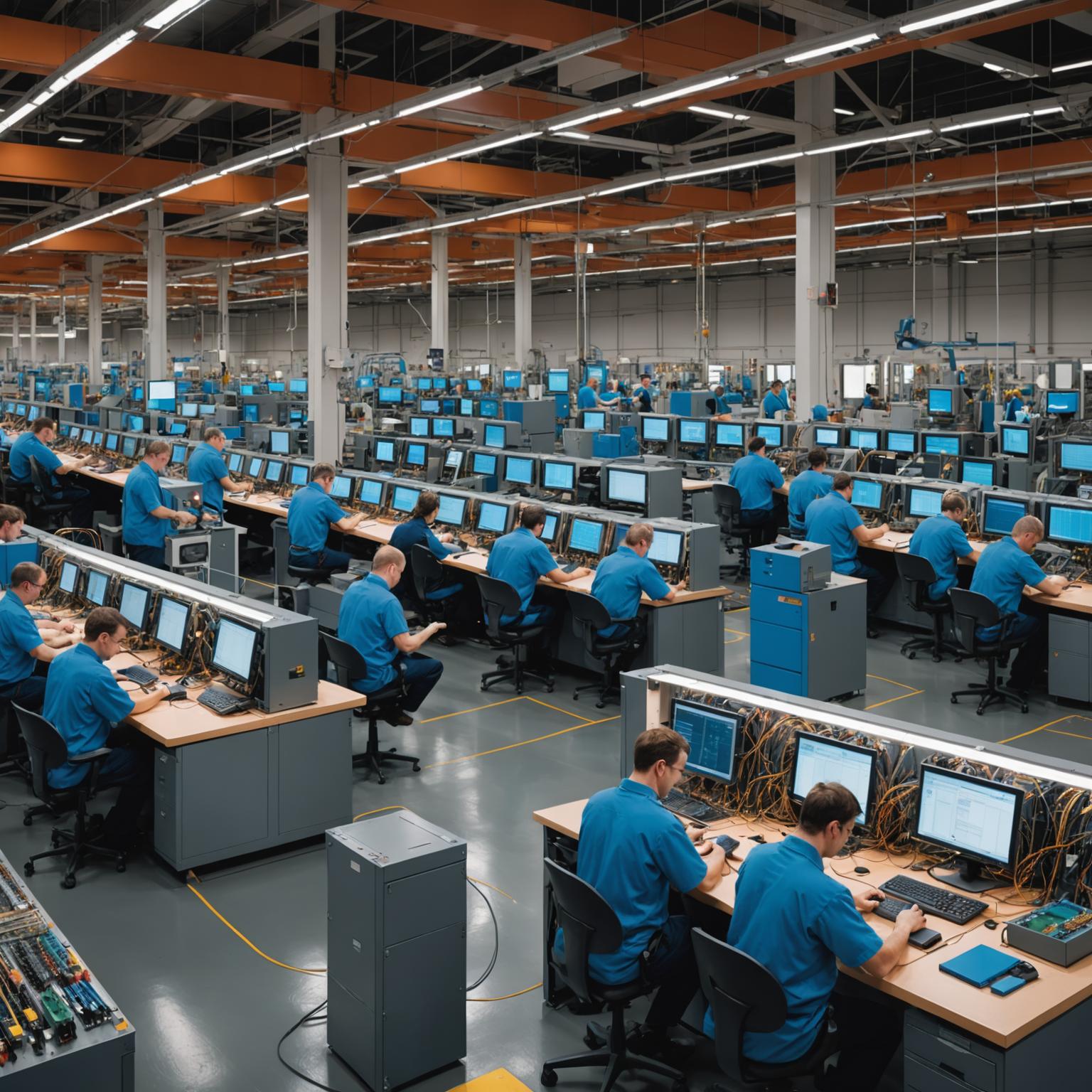
Understanding the Core of Connectivity: A Look Inside a Data Cable Factory
In our hyper-connected world, data cables are the unsung heroes, silently transmitting the vast amounts of information that power our digital lives. From the internet connection in your home to the complex networks that support global businesses, these cables are essential. This guide aims to demystify what goes on inside a modern data cable factory, offering insights into how these critical components are manufactured, with a special look at advanced types like fiber optic cables. Understanding the intricacies of their creation can help appreciate the technology and quality involved, and even guide you if you ever need to source these products.

The Step-by-Step Guide to Data Cable Production
The journey of a data cable begins with raw materials and transforms through a series of precise engineering steps. The process of data cable production typically starts with the conductor material, often copper. This material undergoes wire drawing, where it’s pulled through successively smaller dies to achieve the desired diameter and electrical properties. Next, insulation is applied – a crucial step where plastic polymers are extruded over the conductor to prevent signal interference and ensure safety. For multi-conductor cables, these insulated wires are then twisted together in specific configurations to minimize crosstalk and electromagnetic interference. Following this, a protective outer jacket is extruded over the bundled wires, providing mechanical strength and resistance to environmental factors. Each stage within the data cable factory is carefully monitored to ensure consistency and adherence to standards, forming the backbone of reliable data transmission.
Illuminating Connections: How Fiber Optic Cables Are Made
While copper cables are common, the production of fiber optic cables involves a distinct and highly specialized set of processes, marking a significant segment of advanced data cable production. These cables transmit data as pulses of light, requiring materials of extreme purity. The process often starts with creating a ‘preform,’ a large-diameter rod of highly purified glass. This preform is then heated and drawn into incredibly thin strands of optical fiber, sometimes stretching for kilometers. These delicate fibers are immediately coated with protective layers to preserve their strength and optical properties. Multiple coated fibers might then be bundled together, often with strength members like aramid yarn, and encased in a protective outer jacket to create the final fiber optic cables. This intricate manufacturing process allows for the high bandwidth and long-distance transmission capabilities that fiber optics are known for.
Ensuring Excellence: Quality Control in Data Cable Manufacturing
Stringent quality control is paramount in any reputable data cable factory. From raw material inspection to final product testing, every step is scrutinized to ensure the cables meet performance specifications and industry standards. For copper cables, tests include checks for conductor resistance, insulation integrity, and signal transmission properties like attenuation and crosstalk. For fiber optic cables, testing is even more specialized, involving measurements for optical loss, bandwidth, and chromatic dispersion. Manufacturers often employ sophisticated testing equipment and follow international standards, such as those from ISO or TIA/EIA, to guarantee that their products, whether standard ethernet cables or advanced fiber optic cables, will perform reliably in the demanding environments they are designed for. This commitment to quality is what distinguishes a reliable data cable manufacturer.
Navigating Your Needs: What to Look for in Data Cable Suppliers
A key part of understanding the industry is knowing how to evaluate a data cable factory if you’re considering sourcing products. Look beyond just the price; consider their manufacturing capabilities, the range of products they offer (e.g., specialization in fiber optic cables versus copper), and their adherence to international quality standards. Inquire about their data cable production processes and their quality assurance measures. A transparent manufacturer will be able to provide detailed specifications for their cables and evidence of their testing procedures. Understanding their capacity, lead times, and ability to customize solutions for specific needs are also important factors. Choosing a supplier with robust technical expertise ensures you receive cables that meet your performance and reliability requirements.
The Evolving Landscape of Data Transmission
The field of data transmission is constantly evolving, with increasing demands for higher speeds and greater bandwidth. This directly impacts data cable production, pushing factories to innovate and adopt new technologies and materials. We see ongoing advancements in both copper and fiber optic cables, with new categories of Ethernet cables emerging and fiber optic technology becoming more accessible and versatile. The modern data cable factory is not just a manufacturing plant; it’s an innovation hub, constantly working to improve cable performance, durability, and efficiency to meet the future needs of our digital infrastructure. This continuous improvement ensures that the pathways for our data remain robust and capable of supporting the next generation of communication technologies.