
The Ever-Evolving World of iPhone Connectivity
This is our independent website, you can check out our products.https://pjcases.com
In today’s hyper-connected world, the humble iPhone data cable remains an essential accessory, a lifeline that powers our devices and facilitates the seamless transfer of information. While seemingly simple, the landscape of iPhone charging and data transfer is constantly evolving, driven by technological advancements, regulatory changes, and user demands for greater speed, durability, and convenience. Understanding these trends is crucial for consumers looking to optimize their experience and for businesses navigating the accessory market. The shift away from proprietary connectors towards more universal standards is arguably the most significant trend currently reshaping how we interact with our Apple devices.
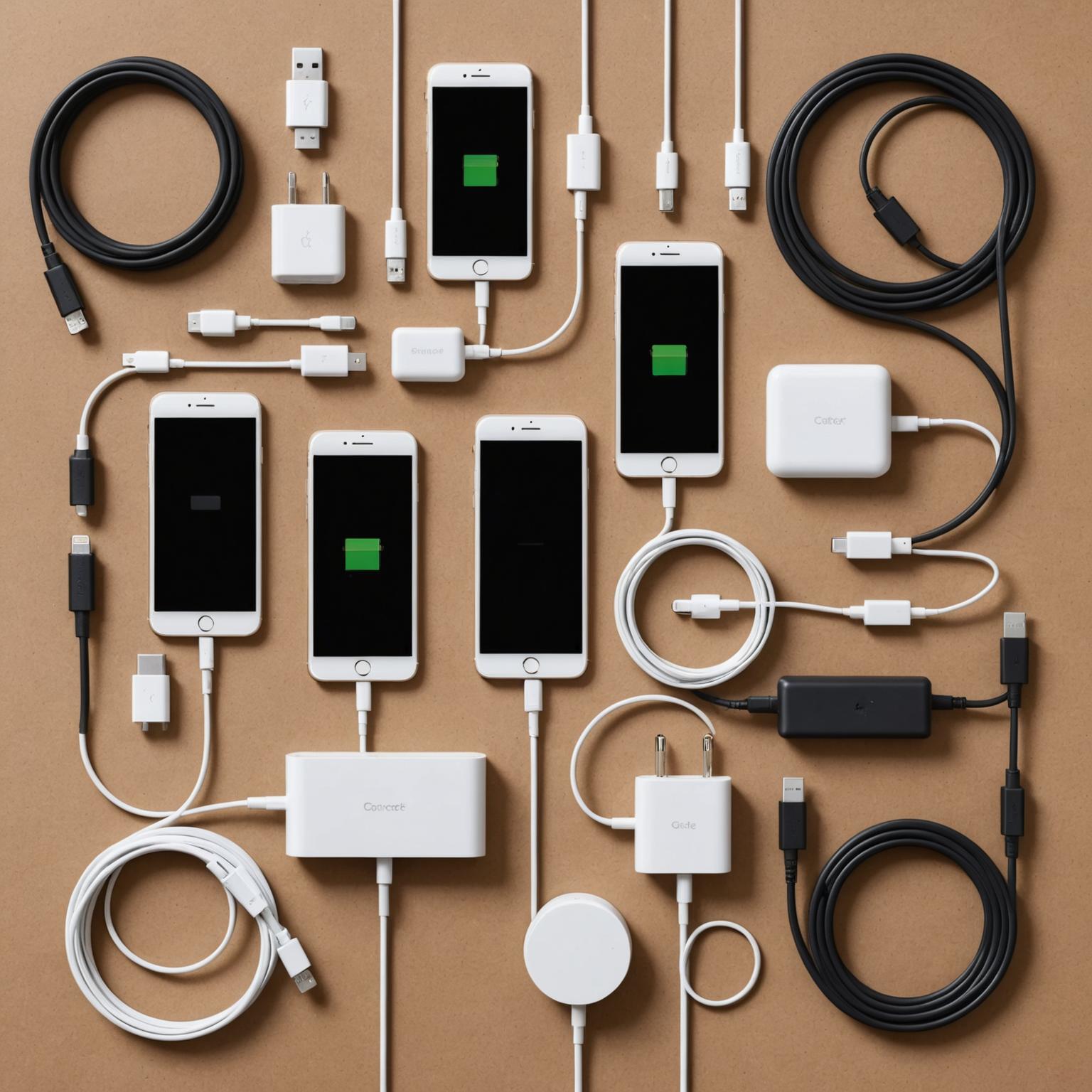
The Enduring Lightning Cable and the Universal Push for USB-C
For years, the lightning cable for iPhone has been the standard, a proprietary connector introduced by Apple that offered a compact and reversible design. However, global trends, spearheaded by regulatory bodies like the European Union, are pushing for a universal charging solution, primarily USB-C. This has led to Apple gradually incorporating USB-C into its product line, starting with iPads and MacBooks, and more recently, the newer iPhone models. While the lightning cable for iPhone still serves a massive user base, the transition to USB-C signifies a broader industry move towards standardization, promising interoperability and reduced electronic waste. Consumers are now navigating a mixed ecosystem, often requiring both types of cables, or adapters, to support their range of Apple and non-Apple devices. This transition period highlights the need for versatile charging solutions.
Beyond the Connector: Trends in Durability, Speed, and Certification
Beyond the type of connector, significant trends are emerging in the construction and performance of the iPhone USB cable. Users are increasingly seeking cables that can withstand the rigors of daily use. This has led to a surge in popularity for cables with enhanced durability features, such as braided nylon sheathing, reinforced stress points at the connector-cable junction, and higher bend lifespans. Another critical trend is the demand for faster charging and data transfer speeds. With iPhone batteries growing larger and file sizes increasing, a cable that supports fast charging protocols like USB Power Delivery (PD) is becoming a necessity, not a luxury. When purchasing an iPhone USB cable, especially a lightning cable for iPhone, MFi (Made for iPhone/iPad/iPod) certification remains a vital consideration. MFi-certified cables ensure safety, compatibility, and optimal performance with Apple devices, protecting against potential damage from non-compliant accessories.
The Rise of Smart Charging Solutions and Cable Management
The proliferation of devices, each potentially with different charging needs and cable types—from the classic iPhone data cable to the newer USB-C variants—has fueled a trend towards smarter and more organized charging solutions. Users are no longer content with a tangle of wires. This has given rise to multi-port charging hubs and docking stations designed to accommodate various devices simultaneously. These hubs often feature a mix of USB-A and USB-C ports, support fast charging standards, and help declutter workspaces. The trend is towards integrated solutions that offer not just power, but also a streamlined experience, reducing the need to switch between multiple chargers and cables. As we see a mix of lightning and USB-C devices in households and offices, these centralized charging stations, capable of handling diverse connection types, are becoming indispensable, simplifying the management of our digital lives.
Future Gazing: Wireless, GaN Technology, and Eco-Consciousness
Looking ahead, the trend towards wireless charging is likely to continue its upward trajectory, potentially reducing reliance on physical cables altogether for day-to-day power needs. However, for fast charging and reliable data transfer, the iPhone data cable will remain relevant for the foreseeable future. We are also seeing advancements in charger technology itself, with Gallium Nitride (GaN) chargers becoming more prevalent. GaN chargers are smaller, more efficient, and generate less heat than traditional silicon-based chargers, allowing for powerful multi-port chargers in compact form factors. Furthermore, there’s a growing eco-consciousness influencing cable manufacturing, with an increasing demand for sustainable materials and more durable products that last longer, thereby reducing e-waste. The evolution of the iPhone USB cable and its associated charging infrastructure will undoubtedly continue, aiming for greater efficiency, convenience, and sustainability.